


Specifying the right cable hardware isn’t just about making a connection; it’s about preventing catastrophic field failures. From RV slide-outs to architectural rigging, the difference between a system that lasts decades and one that snaps under pressure usually comes down to the end fittings.
In this article, we will cover common components such as threaded studs, eye ends, sleeves, stops, clips, and specialty connectors, as well as factors like load ratings, material options, and attachment methods. For a supplier with a comprehensive range of cable hardware as well as bare cable, coated cable (extruded in-house), and custom mechanical cable assemblies, contact the team at Sandin Manufacturing.
Threaded Fittings
Wire rope threaded end fittings create a secure mechanical attachment point for wire and cable assemblies. These fittings are threaded on one or both ends and attach to the cable on the other end by swaging, threading onto the wire rope, or crimping. They are a simple way to connect a wire to a fixture, piece of equipment, or other solid surface.
Common threaded fitting types include:

Threaded studs:
Male threads on one or both ends for mounting flexibility.

Threaded terminals:
Female threads for accepting bolts or threaded rods.

Swage studs:
Combination fittings with a swaged cable attachment end and a threaded end.

Turnbuckle ends:
Hook, eye, or jaw mechanisms on one end of the component provide tension adjustment.
Threaded fittings are available in various thread types, threaded portion lengths, and overall lengths, and in sizes to accept a range of cable diameters. They can be made from different materials for different environments and applications. We stock threaded fittings in:
- Stainless Steel: For marine, architectural, and corrosive environment applications.
- Carbon Steel: Cost-effective solutions for environments with little or no exposure to corrosive elements.
Always match threaded fixture dimensions to the corresponding receiving hardware. Standard UNC and UNF threads suit most applications, though metric threads are also available.
Applications
Slide-out mechanisms and parking brake cables often use threaded studs because they make it possible to compensate for minor variations in tolerances when installing parts.
Traffic signal cable assemblies incorporate threaded fittings for field-adjustable tensioning.
Building codes may specify threaded terminals for adjusting tension. They also have a distinct appearance.
Conveyor systems, material handling equipment, and machinery guards use threaded fittings to simplify installation, tension adjustment, and access for maintenance.
Eye Ends & Fork Ends
Eye ends and fork ends create secure attachment points when cables terminate at pins, shafts, or clevis connections. These fittings attach by swaging, crimping with sleeves, or speltering for permanent terminations.
Examples of eye end configurations include:

Closed eye:
A continuous loop.

Open eye:
For quick installation around fixed pins or through restricted-access areas.

Thimble eye:
An internal thimble prevents the cable from crushing at the bend radius.

Shouldered eye:
An integrated shoulder positions the cable during assembly.
Examples of fork ends include:

Standard fork:
Two-pronged design for clevis pin attachment.

Wide fork:
Increased spacing accommodates thick mounting brackets.

Narrow fork:
Compact design suitable for assemblies with space constraints.
Eye ends are stronger and generally reserved for permanent connections, while fork ends are a convenient choice for wires that frequently need to be disconnected or adjusted in the field.
Load Considerations
This is the ultimate tensile load that will cause fitting failure. The breaking strength of a fitting must exceed the cable’s breaking strength to ensure any failures occur in the cable (i.e., a visible warning sign) rather than the fitting (i.e., no warning sign before a sudden failure).
This is the maximum recommended load, accounting for safety factors, dynamic loading, and fatigue. Standard safety factors range from 5:1 for static loads to 10:1 for dynamic or shock loading.
This is the test load applied by a manufacturer during verification checks. To pass proof testing, fittings must demonstrate structural integrity without permanent deformation.
Undersized fittings create weak points that can fail prematurely, while oversized fittings often add unnecessary cost and weight. Cable diameter, construction, and material grade affect fitting load capacity. Our engineering team can provide support for choosing compatible cables and hardware ratings.
Sleeves & Stops
Sleeves and stops are used to secure cable ends, create loops at the ends of wires, and prevent cables from unraveling. The cable is fed through, then the component is crimped or swaged in place.
Sleeve types:

Oval sleeves:
General-purpose crimped component for light-to-medium duty.

Round sleeves:
Heavy-wall construction for extra strength and durability.

Duplex sleeves:
Double-barrel design with space for two cables.

Stop sleeves:
Single-end crimped component that prevents cable pull-through.
Stop configurations:

Ball stops:
Spherical fitting that limits how far the cable moves in guide systems.

Ferrule stops:
Cylindrical stops to retain cables in place.

Custom stops:
Shapes, sizes, and materials designed for specific requirements.
Crimping & Swaging
Crimping and swaging are two ways to attach fittings like sleeves and stops to a wire or cable. In crimping, the metal sleeve is pinched with a crimping tool at several points around the fitting, which deforms the sleeve and secures it in place. In swaging, pressure is applied all around the sleeve’s circumference at once with high-power tools, compressing it into the cable and forming a permanent mechanical bond.
A common mistake engineers make is specifying standard crimping for high-vibration environments. While crimping is fine for general purposes, if your assembly is mission-critical or handles heavy dynamic loads, you absolutely need the 360-degree compression of hydraulic swaging.
Clips & Connectors
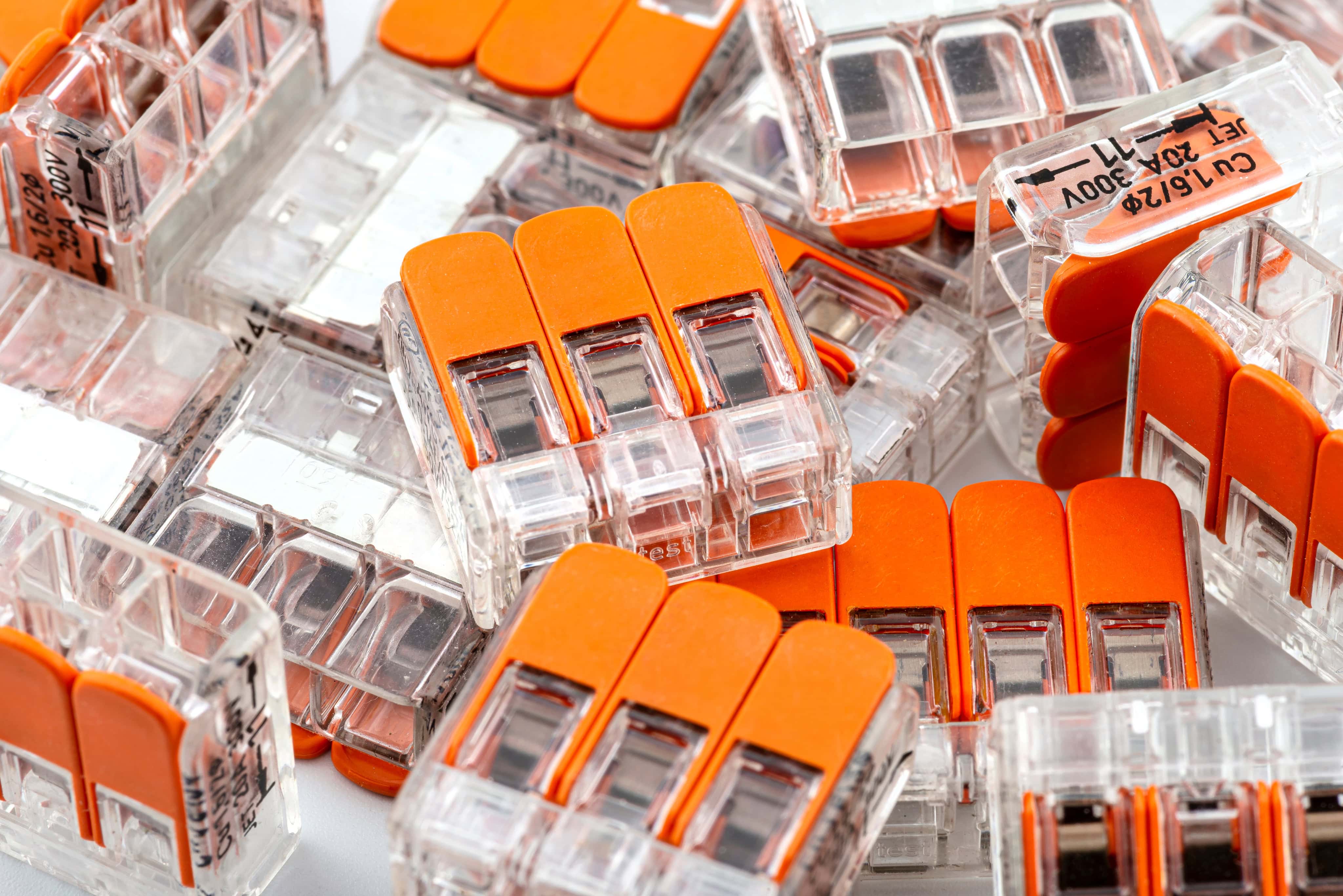
Clips and connectors join cables together, secure cables to surfaces, and create adjustable-length assemblies. These components typically install without special tools.
Clip types:
- Wire rope clips (cable clamps): U-bolt design tightly holds multiple cables or wire ropes together.
- Simplex/duplex clips: These create a single or double cable attachment to mounting surfaces.
- Cushion clips: These dampen the vibration of the cable while holding it in place.
Connector configurations:

Quick-connect fittings:
These connect quickly without tools.

Barrel connectors:
In-line cable joining.

Swivel connectors:
Rotating joints prevent cables from twisting.
Wire rope clips are not permanent, and are useful in situations where it will be necessary to adjust the length or loop size of a wire rope application. Similarly, quick-connect style connectors are a good choice when wire rope must be disconnected regularly. In contrast, swaged connectors are permanent and cannot be adjusted or temporarily removed for maintenance or repair.
Find the Right Connector for Your Next Project at Sandin Manufacturing
Whether you need standard and custom connectors and fittings for wire rope and cable assemblies, or a range of stock fittings in different configurations, sizes, and materials, Sandin Manufacturing offers these capabilities and more.
With over 60 years of experience, the Sandin team can also manufacture custom CNC-machined fittings and is ISO 9001:2015-certified for quality management, helping you determine the best hardware for your application.
Ready to discuss your application for pricing details? Request a quote today!